
The Courage to Rest: 5 Ways to Support Your Body Through Cold & Flu Season

I think most of us know that feeling.
Maybe it's a little tickle in your throat. You wake up more tired than usual. Your head feels heavy. Your body aches in a way that doesn't quite make sense. Or you simply have that unmistakable feeling of, I think I'm coming down with something.

We have work to do, people depending on us, appointments on the calendar, workouts we don't want to miss, and plans we've been looking forward to. So when those first little signs appear, it's easy to tell ourselves, I'm probably fine.
We keep going, push through the day, and promise ourselves we can always rest tomorrow.
I've certainly done that. But over time, I've learned that my body usually knows what it needs long before I'm willing to admit it.
So now, when I notice those early signals, I try to pay attention. I look at what I can take off my plate, where I can create a little more space, and what might help my body feel supported.
I don't have a perfect formula for preventing every cold or making an illness disappear more quickly. What I do have is a collection of simple practices I've come to rely on when I'm feeling run down or under the weather—things that help me slow down, get comfortable, and give my body a little extra care.
And perhaps the most important practice doesn't require anything at all:
I give myself permission to rest.
5 Ways to Care for Yourself During Cold & Flu Season
Our bodies communicate with us all the time.
When you're feeling under the weather, self-care doesn't need to become another long list of things you should be doing. Instead, consider asking yourself a simpler question:
Instead of thinking about all the things you should be doing to feel better, try asking yourself a different question: What would feel supportive to my body today?

The answer may change from one day to the next. Maybe your body would appreciate a little gentle movement and fresh air. Maybe warmth sounds comforting—a hot bath, a cozy blanket, or time resting on an infrared mat. You may need something nourishing to eat, more water, an earlier bedtime, or a guided meditation to help your mind become as quiet as your body wants to be.
And sometimes, the answer may simply be less. Less on the calendar. Less rushing. Less trying to keep up with everything you normally do. It may mean canceling plans, skipping the workout, turning off your phone, and going back to bed without feeling like you need to justify it.

Over the years, I've gathered a handful of practices that I personally return to when I'm feeling run down or under the weather. I'm sharing five of my favorites with you—not as a prescription or another wellness checklist to complete, but as ideas you might explore when your own body is asking for a little more care:
Move gently + create space to rest
Try Facial Reflexology for comfort
Use warmth to soothe achy muscles
Let guided meditation help you settle
Nourish + hydrate your body
You certainly don't need to do all five. You may choose one that sounds comforting today and something completely different tomorrow. The intention is simply to listen, respond, and give yourself what you need at that moment.
Move Gently + Create Space to Rest
One of the things I believe deeply is that Movement Heals. That doesn't always mean working harder, getting stronger, or completing the workout we had planned. Sometimes the movement our body needs most is slow, gentle, and restorative.

When we're under the weather, spending more time sitting or lying down can leave the body feeling stiff and achy. Gentle movement can help us move our joints, stretch muscles that have become tight from being still, release some of the tension we're holding, and support the natural movement of lymph through the body. Because the lymphatic system doesn't have a central pump like the heart, everyday things such as muscle contraction, breathing, and body movement help keep lymph moving.
This is where I think it's important to distinguish movement from exercise. If your body is asking you to rest, this isn't the time to push through a workout simply because it's on the calendar. Instead, consider a few minutes of gentle movement with the intention of helping your body feel more comfortable.
A slow Gentle Yoga practice can be wonderful for this. Breathe deeply. Move your spine. Gently open your chest. Stretch your arms and legs. Notice the places that feel tight or achy and give them a little space. The goal isn't to accomplish anything or even finish an entire class. It's simply to move enough to help your body feel a little less stagnant and perhaps make it easier to settle back into rest.
I've created a Gentle Yoga for Immunity practice in the PeaceFull Essentials library for exactly these kinds of days—when you want the benefits of movement but your body needs a much softer approach.

Afterward, I love transitioning from gentle movement into warmth. A hot bath with Epsom salts, lavender, and eucalyptus can feel especially comforting when my muscles are achy. I turn down the lights, let myself soak, and allow the bath to become part of the transition from movement into rest.
Then, if it feels good, try Legs Up the Wall Pose. Get comfortable, add pillows or blankets for support, close your eyes, and let your breathing become easy. You don't need to stay for a certain amount of time or turn it into another thing to accomplish.
For me, this is what Movement Heals can look like when I'm not feeling my best: not pushing my body, but gently working with it.
A little movement. A little warmth. A little less tension.
And then, hopefully, a little more comfortable rest.
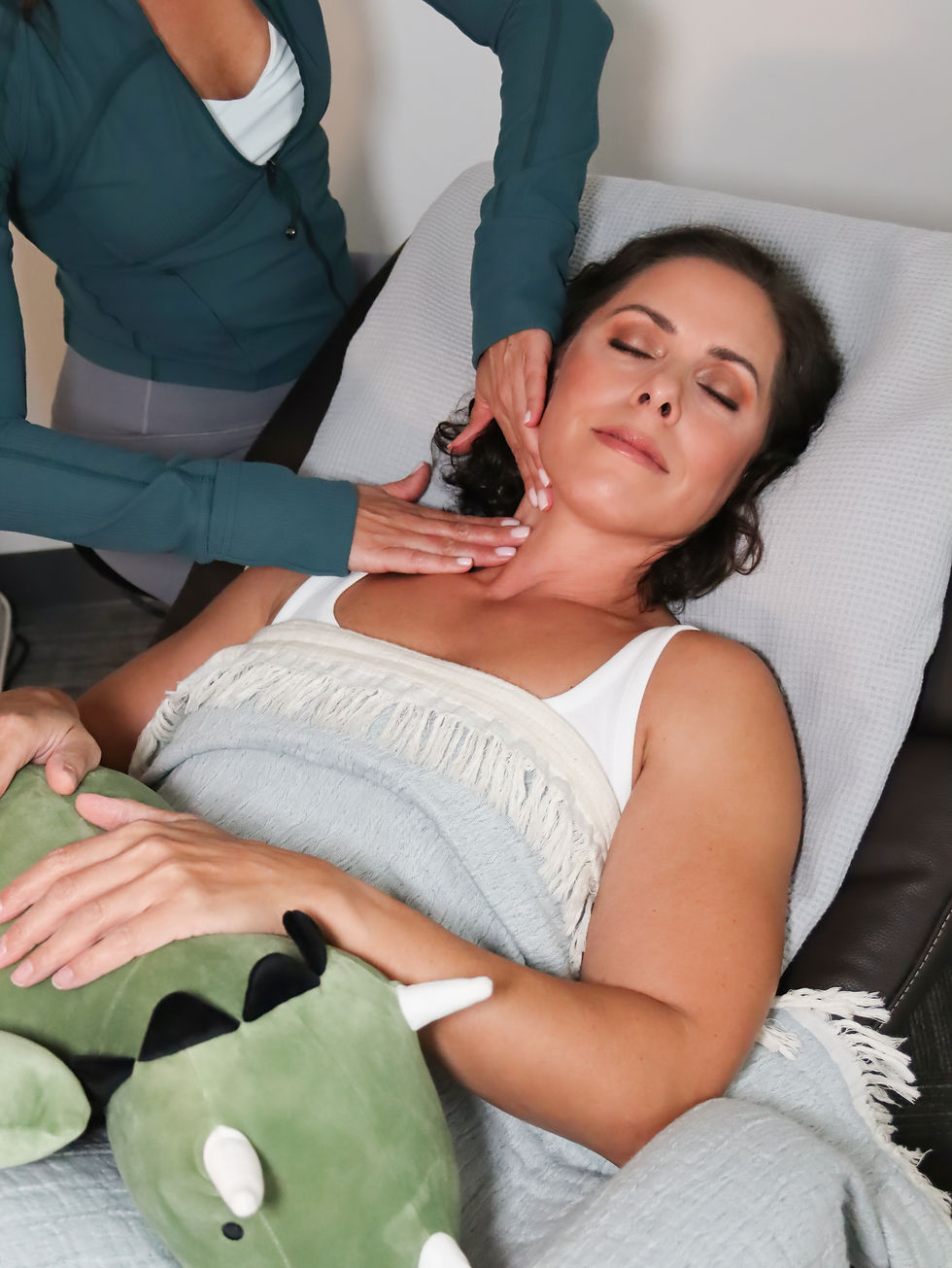
Try Facial Reflexology for Sinus + Respiratory Comfort
If a cold leaves you feeling stuffy or uncomfortable through the face and head, gentle touch can be a soothing addition to your rest.

You might explore Facial Reflexology as a comforting practice, using gentle pressure and intentional touch through areas of the face.
In my own practice, I use facial reflexology points traditionally associated with the sinuses and respiratory system when I'm experiencing sinus pressure, a stuffy nose, or a headache.
One of the things I love most about Facial Reflexology is how accessible it can be. You can practice while resting in bed or sitting comfortably in a chair. You don't need much energy or equipment—just your hands and a few minutes.
Use Warmth to Soothe Achy Muscles
When your body feels tired and achy, warmth can be incredibly comforting. A hot bath, heating pad, cozy blanket, or infrared mat can help create a warm, inviting place to settle in and give yourself permission to rest.

I personally love resting on my GROONI PEMF infrared mat when my muscles feel tight, tired, or achy.
The infrared warmth feels wonderful, but I also appreciate that getting on the mat gives me a reason to stop what I'm doing, lie down, and stay there for a while.
If you have an infrared mat or another source of heat at home, consider making that time part of your rest rather than another opportunity to be productive. Put your phone aside and create an experience that feels comforting to you. Watch a favorite movie, listen to music, or close your eyes and put on a guided meditation. Grab a blanket, dim the lights, and let yourself get cozy.
Rest doesn't always have to mean sleeping. Sometimes it's simply creating the conditions that allow your body to soften and your mind to become a little quieter.
Let Guided Meditation Help You Settle
Sometimes the body is ready to rest long before the mind is.
You finally lie down and suddenly you're thinking about the emails you haven't answered, the appointment you canceled, the workout you're missing, or everything you'll need to catch up on tomorrow.

If simply telling yourself to relax isn't working, try a guided meditation.
Rather than asking your mind to become completely quiet, a guided practice offers you something gentle to follow. Listen to the voice, notice your breathing, and allow yourself to rest without requiring yourself to fall asleep.
This is one of the reasons I've created so many guided practices in the PeaceFull Essentials library. Sometimes we need a little help making the transition from doing to being.
Choose a short meditation, Yoga Nidra, or another restful practice and give yourself permission to simply receive it.
Nourish + Hydrate Your Body
When you're not feeling well, think simple.

Warm foods, plenty of fluids, and meals that are easy to eat feel especially comforting.
For me, nothing says comfort quite like a bowl of homemade chicken soup. I make mine from scratch with a whole organic chicken, root vegetables, herbs, bone broth, and plenty of time to simmer.
If you'd like to make it too, here's my recipe.
Roberta's Homemade Chicken Soup
For the broth:
1 whole organic chicken, rinsed
Olive oil
Garlic cloves
Carrots
Celery root
Parsnips
1 onion
Celery
Whole peppercorns
Fresh parsley
1 box organic chicken bone broth
4–6 cups water
Note: All vegetables are roughly chopped.
To finish the soup:
Fresh chopped carrots
Fresh chopped celery
Salt, to taste
Shredded chicken from the broth
Add a little olive oil to a large Dutch oven and brown the whole chicken and onion.
Add the garlic, carrots, celery root, parsnips, celery, peppercorns, parsley, chicken bone broth, and water. Bring everything to a boil, then reduce the heat and gently simmer for approximately 1–2 hours, or until the chicken is safely cooked through and tender.
Remove the chicken and strain the broth into a large bowl. Discard the vegetables used to flavor the broth.
Once the chicken is cool enough to handle, remove and shred the meat and set it aside.
Return the broth to your Dutch oven and add freshly chopped carrots and celery. Sometimes I save some of the cooked carrots from the original broth, mash them, and add them back into the soup as well.
Season with salt and simmer until the vegetables are tender.
Finally, return the shredded chicken to the pot and simmer everything together for another 15–20 minutes before serving.
Along with nourishing foods, remember to keep fluids nearby throughout the day. Water is always a simple choice. When I want something different, I also enjoy Nuun electrolyte tablets and Vita Coco Pineapple Mango coconut water.
You don't need a complicated wellness routine. Sometimes a warm bowl of soup, something to drink, and a comfortable place to rest are exactly enough.
And One More Thing: Don't Try to “Make Up” for Rest
As you begin to feel better, it can be tempting to look at everything that piled up while you were resting and immediately start catching up. The work, the errands, the plans you canceled—and, if you're someone who loves to move, the workouts you missed.
I understand that pull. Once we have a little energy again, we want to get back to feeling like ourselves. But feeling better doesn't always mean our body is ready to return to everything we were doing before.
Give yourself a little more time.
If something can wait another day, let it wait. If you need to say no to one more commitment, change your plans, or take another afternoon to rest, that's okay. You haven't lost the progress you made in your workouts, and you don't need to make up for the days you spent taking care of yourself. Rest was part of the work.
When you do feel ready to begin moving again, think about easing your way back rather than jumping right into your usual routine. For me, that might look something like Rest → Gentle Yoga → Yin Yoga → Pilates → Cardio + Strength Training. Your progression may look completely different, and that's okay too.
Continue listening to your body along the way. Notice not only how you feel while you're moving, but how you feel later that day. Did that little bit of movement leave you feeling more like yourself? Wonderful. Maybe tomorrow you're ready for a little more. Did it leave you feeling depleted? That may simply be your body's way of asking for another day of rest.
There is no prize for getting back to your normal routine first. Give yourself the same patience and care you would offer someone you love.
Courage Doesn't Always Mean Pushing Through
Our October theme at PeaceFull Living is Courage & Compassion, and as I've been writing this, I've realized how beautifully those two words describe the way I hope we can learn to care for ourselves.

We tend to think of courage as pushing forward. Keep going. Be strong. Don't quit. And there are certainly times in life when we need that kind of courage.
But I think there is another kind, too.
Sometimes courage is recognizing that you're tired and going to bed early. It's canceling the workout you were determined not to miss. It's making a pot of soup, putting on your favorite movie, and deciding that the rest of your list really can wait until tomorrow. It's saying no to something you simply don't have the energy for—and trusting that you don't need to feel guilty or offer a long explanation.
And maybe that's where compassion comes in. Compassion is giving ourselves permission to make those choices without judging ourselves for them.
Life will still be waiting when we feel better. There will be another workout, another meeting, another load of laundry, another errand, and another opportunity to say yes. We don't have to squeeze all of it into a day when our body is asking us for something different.
So as we move into the cold and flu season, I hope you'll pay attention to those early whispers. Notice when your body feels a little more tired than usual. Notice when you're craving warmth, quiet, nourishing food, gentle movement, or an earlier bedtime. And when you can, respond with a little more kindness rather than immediately asking yourself to push through.
Courage isn't always pushing through. Sometimes courage is listening when your body asks you to rest. And compassion is allowing yourself to do it.
About The Author

Roberta Hughes is a Nationally Certified Pilates Teacher, facial reflexology specialist, and a meditation and yoga instructor. She is the founder of PeaceFull Living—a wellness space devoted to helping people slow down, tune in, and become intentional about self care. With a personalized approach, Roberta empowers her clients to prioritize their well-being through mindful movement and healing practices that include Pilates, facial reflexology, and yoga.
Roberta is passionate about helping individuals build sustainable wellness habits, whether through in-person sessions or by creating a nurturing home practice using the PeaceFull Essentials video library. This on-demand resource is designed to fit into even the busiest of lifestyles, offering accessible tools to support physical health, emotional balance, and inner calm.
Roberta offers complimentary consultations to help new students clarify their goals and select the best path forward. If you're ready to reconnect with yourself and create space for wellness in your life, visit the PeaceFull Living website to get started.


Comments